01 / Short answer
Only Quebec and British Columbia require winter tires.
Quebec requires winter tires on Quebec-registered passenger vehicles from December 1 to March 15. British Columbia requires winter tires or chains on designated highways, on most routes from October 1 to April 30. Everywhere else in Canada they are optional, but recommended wherever winter brings snow, ice or temperatures that stay near freezing.
02 / Province by province
What the rules say where you drive.
| Province | Required? | Dates | What counts |
|---|---|---|---|
| Quebec | Yes, for vehicles registered in Quebec, including rentals | December 1 to March 15 | Tires with the three-peak mountain snowflake symbol, or studded tires. The SAAQ lists a fine of $200 to $300 plus costs. |
| British Columbia | Yes, on designated highways marked with signs | October 1 to April 30 on most routes; some routes outside mountain passes and high-snowfall areas end March 31 | Tires marked M+S or with the three-peak mountain snowflake, with at least 3.5 mm of tread, or chains. Chains on summer tires don't count. |
| Ontario | No | Not applicable | Insurers must offer a discount to drivers who use winter tires; the amount and proof required vary by insurer. |
| Other provinces and territories | No | Not applicable | Winter tires are recommended. Studded tire rules and dates vary, so check your province before fitting studs. |
On B.C.'s coast, many Lower Mainland and southern Vancouver Island routes are exempt, but the Malahat is not. See B.C.'s route maps ↗
03 / Which tires count
Look for the mountain snowflake, not just M+S.
The sidewall tells you how a tire is rated for winter.
Three-peak mountain snowflake
A mountain with a snowflake inside, molded on the sidewall. Dedicated winter tires carry it, and so do all-weather tires. It satisfies both Quebec and B.C.
M+S (mud and snow)
Common on all-season tires. B.C. accepts it as the legal minimum on designated highways, but Quebec does not.
Studded tires
Quebec accepts studded tires as winter tires and allows studs from October 15 to May 1. B.C. allows them October 1 to April 30. In Ontario they are limited to vehicles registered in Northern Ontario and visitors from out of province.
04 / Before you buy
Five checks for a new set.
- 01
Find your exact size
It's on the placard inside the driver's door jamb and on your current tires' sidewall, for example 225/65R17. Match the load and speed rating your vehicle needs.
- 02
Buy four, not two
Fit winter tires on all four wheels. Mixing winter and non-winter tires front to rear can make a vehicle harder to control on snow and ice.
- 03
Decide on a second set of wheels
Mounting winter tires on their own wheels makes each seasonal swap quicker and cheaper. If your car has tire pressure sensors, ask whether the second set needs its own.
- 04
Check the tread and age
For used or stored tires, measure the tread: B.C. requires at least 3.5 mm on designated highways, and grip in snow drops as tread wears. The four-digit date code on the sidewall shows the week and year a tire was made.
- 05
Ask your insurer
In Ontario, insurers must offer a winter tire discount. Ask what qualifies, since some insurers treat all-weather tires differently.
05 / When to switch
Before the first snow, not after it.
When it stays below about 7°C
A common rule of thumb from Canadian tire industry groups: all-season rubber stiffens as temperatures drop, while winter compounds stay flexible.
Don't wait for December 1
The SAAQ suggests installing winter tires before the deadline and keeping them after March 15, since winter weather can arrive early and leave late.
When it stays above about 7°C
Winter tires wear faster on warm, dry roads. Swap back once temperatures stay above that mark and the legal period in your province has ended.
06 / Winter car kit
Small things that help all season.
Each link opens an Amazon.ca search for the product. For more ideas, see the car accessories buying guide and winter gifts for drivers.
Slime digital tire pressure gauge
Tire pressure drops as temperatures fall. Check it monthly against the placard on the driver's door jamb, with tires cold.
AstroAI portable tire inflator
Tops up pressure from the car's 12 V outlet, so a cold morning doesn't mean a trip to the gas station.
NOCO Boost Plus GB40 jump starter
Cold weather is hard on batteries. A jump starter works without a second vehicle; check it suits your engine size.
Hopkins SubZero ice scraper and snow brush
Clear the whole car, roof included. Choose the length for your vehicle.
Lifeline AAA Road Kit
A starting point for a winter kit; add a blanket, gloves, a phone charger and some food.
07 / Quick answers
Common questions.
Are winter tires mandatory in Canada?
Only in Quebec and British Columbia. Quebec requires winter tires on Quebec-registered passenger vehicles from December 1 to March 15. B.C. requires winter tires or chains on designated highways, on most routes from October 1 to April 30. Elsewhere they are optional but recommended.
Do all-season tires count as winter tires?
Not in Quebec, where winter tires must show the three-peak mountain snowflake symbol or be studded. In B.C., tires marked M+S meet the legal minimum on designated highways if they have at least 3.5 mm of tread.
Do all-weather tires count as winter tires in Quebec?
Yes, if the sidewall shows the three-peak mountain snowflake symbol, which all-weather tires carry. Check the sidewall before you buy.
When should I put winter tires on?
A common rule of thumb is once temperatures stay below about 7°C. In Quebec, the SAAQ suggests installing them before the December 1 deadline.
Does Ontario require winter tires?
No. Ontario insurers must offer a discount to drivers who use winter tires; the amount and the proof required vary by insurer.
08 / Sources
Official pages to check.
- SAAQ: Getting ready for winter (Quebec) ↗
- B.C.: Passenger vehicle tire and chain requirements ↗
- B.C.: Designated winter tire and chain routes ↗
- Ontario: Winter driving ↗
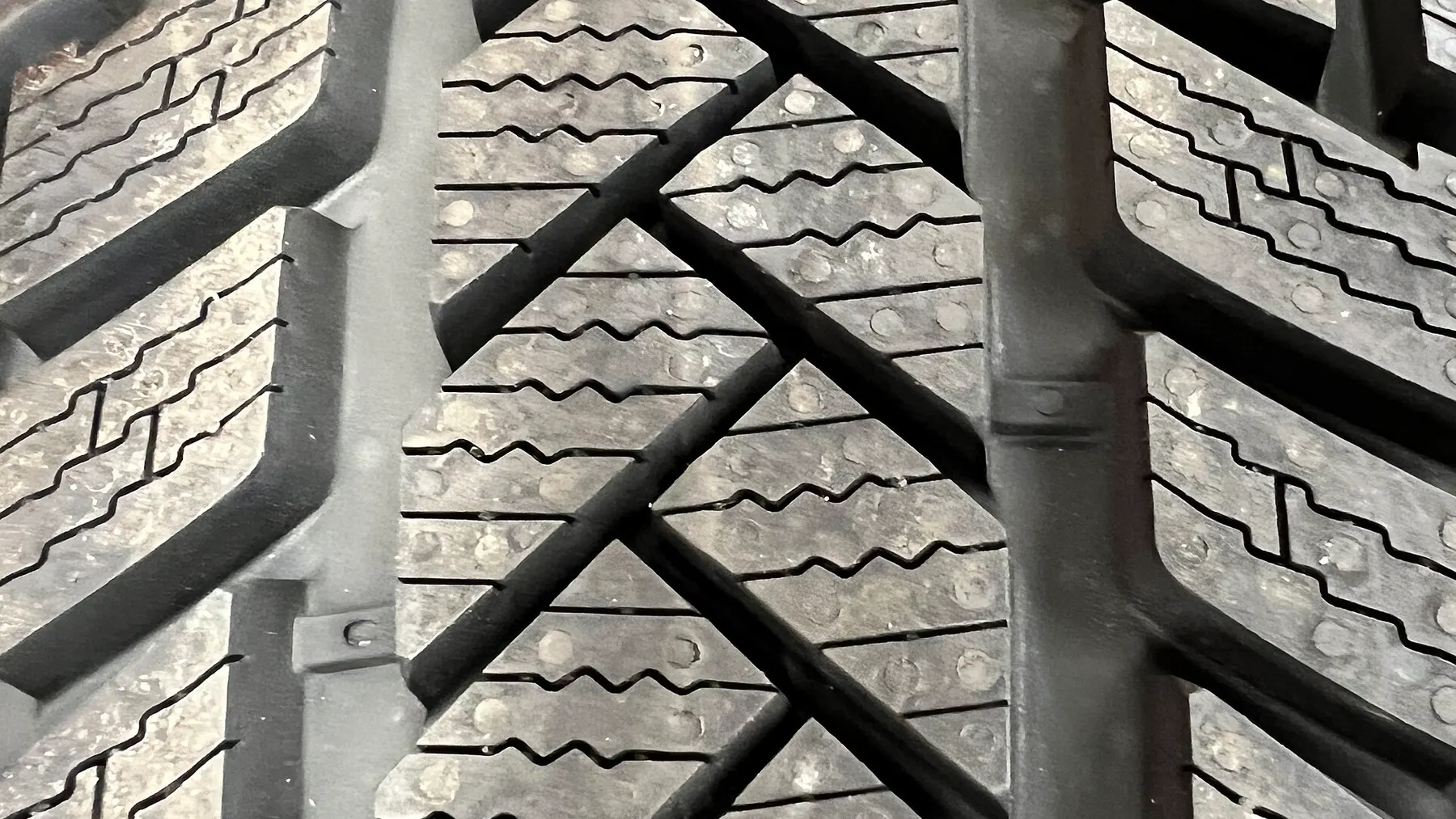
Hero photo: “Snow tire tread” by the Oregon Department of Transportation, via Wikimedia Commons, CC BY 2.0, cropped.